
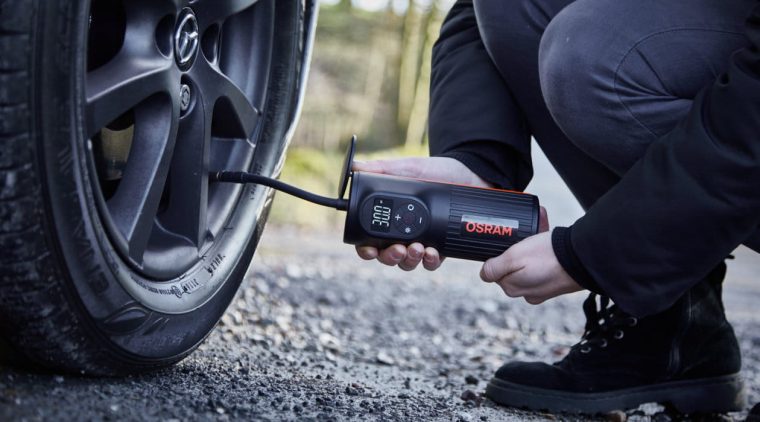
This simple tire pressure calculator uses the information you provide to help you determine the correct tire pressure for your vehicle. This ensures a more comfortable ride, greater safety, and enhanced protection against punctures.
Your car’s tires are constantly in contact with the road surface, meaning they are more exposed to external forces than other vehicle components. Given this, in order to ensure a safe and comfortable ride, your tires simply must be in good condition. And, one of the main criteria for good condition is ensuring you have the correct tire pressure.
Tire Pressure Calculator
Adjust for vehicle type, load and temperature. Based on Gay-Lussac’s Law + load offset tables.
Step 1 — Vehicle type
Step 2 — Load / passengers
Car — Solo: No load offset. Use your door-sticker cold pressure directly.
Step 3 — Pressure & temperature
Please fill in all three fields with valid values.
P_final = (P_rec × T₂ / T₁) + P_loadTemperatures are converted to Kelvin (K = °C + 273.15) before calculation.
P_load is a manufacturer-derived PSI offset based on vehicle class and load level.
For every 10 °C drop, expect roughly 1–2 PSI of pressure loss.
Always cross-check with your vehicle’s door sticker or owner’s manual.
This calculator uses a simple and effective formula that includes three key parameters to calculate the tire pressure: vehicle weight, maximum tire load, and maximum tire pressure.
Pressures are absolute, temperatures are in Kelvin (K = °C + 273.15). Since tire volume stays constant, pressure changes proportionally with temperature. In practice, roughly 1–2 PSI lost per 10°C drop — which is exactly what this law models precisely.
Why is this important?
Well, if your car’s tire pressure is too low, the tire will deform and generate more heat. The outer tread blocks will wear out faster, while also increasing fuel consumption. Additionally, if you hit a pothole, there is a far greater likelihood of damaging the rim and the tire itself.
Conversely, if tire pressure is too high, wear on the center of the tread will accelerate. All the while, both the driver and their passengers will feel every bump in the road, which can also impact the lifespan of the vehicle’s suspension.
Optimal tire pressure values are specific to each vehicle and determined solely by the manufacturer.